
We’re confirming your appointment. This may take a few seconds.
Are you or a loved one still trying to cope with memories of a past traumatic event that keep affecting daily life? Unwanted memories, nightmares, anxiety, avoidance, emotional numbness, and feeling alert all the time are common signs of trauma.
A past trauma can change how you:
• Think and Feel
• Sleep
• Connect With Other People
• Function in Daily Life
• Struggling to Focus on Tasks or Finish Basic Tasks
A trained mental health professional can help you get care for PTSD and other trauma-related concerns.

A traumatic event can affect anyone at any age. In the short term, fear, stress, and physical signs are common. For some people, these effects fade with time. For others, trauma can lead to PTSD.
Traumatic events may include:
• Severe Accidents
• Violence or Assault
• Natural Disasters
• War or Combat
A clinician can help if trauma causes symptoms such as:
• Painful Memories
• Flashbacks
• Bad Nightmares
• A Constant Sense of Dread
• Emotional Numbness
• Feeling Unsafe When There Is No Real Danger
• Avoiding Places, People, or Events That Remind You of the Trauma
• Trouble Sleeping
• Trouble Concentrating
With the right care, treatment can ease the burden of trauma and support healing.
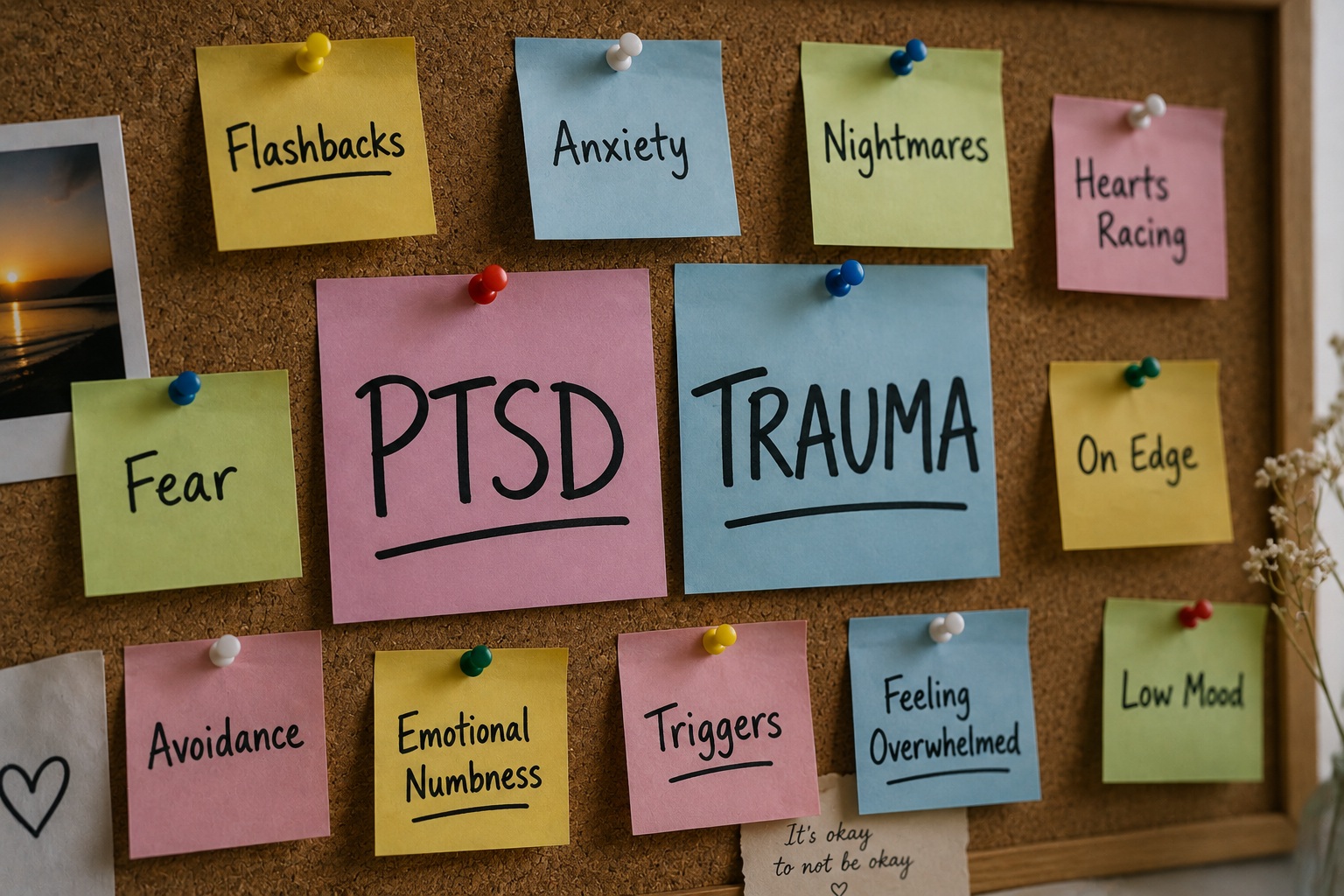
At Luna Bloom Psychiatry, we treat trauma symptoms with care and a personal touch.
During your evaluation, your provider may review:
• Your Current Symptoms
• Your Background
• Your Sleep Habits
• Your Daily Function
• Any Medicines You Take Now
• How Your Past Experiences Affect Your Mental Health
Treatment for PTSD may include:
• Therapy
• Medication
• Both
The best plan depends on your symptoms, goals, and needs.
Evidence-based therapies for PTSD can target trauma-related:
• Thoughts
• Memories
• Avoidance
• Emotions
If medicine is part of care, your provider can review options and check your progress over time.
Medication may help with:
• Depression
• Anxiety
• Sleep Problems
• Other Trauma-Related Issues

We want you to have a safe place to talk about your symptoms and experiences without judgment. The goal is to find a treatment plan that helps you feel more balanced, function better, and move toward your goals.
Luna Bloom Psychiatry provides compassionate, individualized care for adults and teens experiencing PTSD and other trauma-related conditions. We offer comprehensive evaluations, personalized treatment plans, and ongoing support to help clients move toward healing and recovery.
Ashley Nerusu is a compassionate provider who takes the time to understand each client's unique experiences and develops personalized treatment plans that support lasting mental wellness.
Whether you are a teen living with trauma or an adult who has had trauma symptoms for years, Luna Bloom Psychiatry offers personal support.
Trauma-related symptoms often happen with other concerns, such as:
• Anxiety Disorders
• Depression
• Sleep Problems
• Other Mental Health Conditions
Seeing how these issues connect helps your provider build a fuller picture and create a custom care plan.
If you need specialized mental health services, you do not need to downplay your experience. You also do not need to wait until symptoms become severe before seeking help.

If you're a teenager navigating the effects of trauma or an adult living with trauma symptoms for years, Luna Bloom Psychiatry offers personalized psychiatric assistance. It's common to experience trauma-related symptoms concurrently with an underlying anxiety disorder, depression, or other mental condition, including poor sleep hygiene.
Understanding how these issues intersect will equip your Luna Bloom provider with comprehensive knowledge and enable you to be matched with a customized plan for psychiatric support. If you require specialized psychiatric services, there is no need to downplay your experiences or to feel that you need to wait for trauma symptoms to become debilitating to seek assistance.
It may be time to get professional help if trauma-related symptoms keep affecting your daily life.
Consider an assessment if you have:
• Recurring or Unwanted Memories of a Past Traumatic Event
• Troubling Dreams or Sleep Problems
• Flashbacks or a Sense That It Is Happening Again
• Anxiety Triggered by Someone, Somewhere, or Something Linked to the Event
• Feeling Tense or Always Alert
• Getting Startled Easily
• Frequent Anxiety, Fear, Sadness, Anger, or Edginess
• Feeling Numb or Cut Off From Others
• Struggling to Focus on Tasks or Finish Basic Tasks
• Pulling Away From Family, Friends, or Activities You Once Enjoyed

If these symptoms last more than a month or start to affect family, friends, work, sleep, or daily life, an assessment can help you understand what is going on and get a personal treatment plan.
If you are thinking about harming yourself or someone else, or if you feel in immediate danger, get help right away.
At Luna Bloom Psychiatry, we work to make personal mental health care easier to reach for eligible clients. If you live in one of the states below and want help understanding PTSD or trauma symptoms and building a care plan, we are ready to help.

We provide psychiatric evaluation, medication management, and ongoing support in:
• Ohio
• Florida
• Virginia
• California
• New York
• Massachusetts
• Iowa
• Washington
• New Jersey
• Colorado
• Texas
• Missouri
You are not alone, and you do not have to carry the weight of trauma by yourself.
Luna Bloom Psychiatry is ready to offer compassionate support as you work to understand your symptoms, improve daily life, and move toward stability and healing.
Book an appointment for a consultation. This is your first step toward better understanding PTSD or trauma-related symptoms and getting a personal treatment plan.

Persistent symptoms lasting more than a month after a traumatic event may indicate PTSD.
Yes, unresolved trauma can contribute to sleep problems, chronic stress, and physical health concerns.
Professional support is recommended when trauma symptoms interfere with daily functioning or relationships.
Yes, PTSD symptoms can emerge months or even years after experiencing trauma
Medication may help manage symptoms when combined with a comprehensive treatment plan.
Luna Bloom Psychiatry offers individualized treatment plans designed to help patients manage trauma-related symptoms and improve quality of life.
Your information is 100% confidential and protected under HIPAA regulations.
Not ready to fill out the form? Call us directly at +1 614-324-9099.

Receive compassionate, personalized PTSD and trauma care designed to help teens and adults manage symptoms, build coping skills, and move toward greater stability
Schedule Your Consultation
