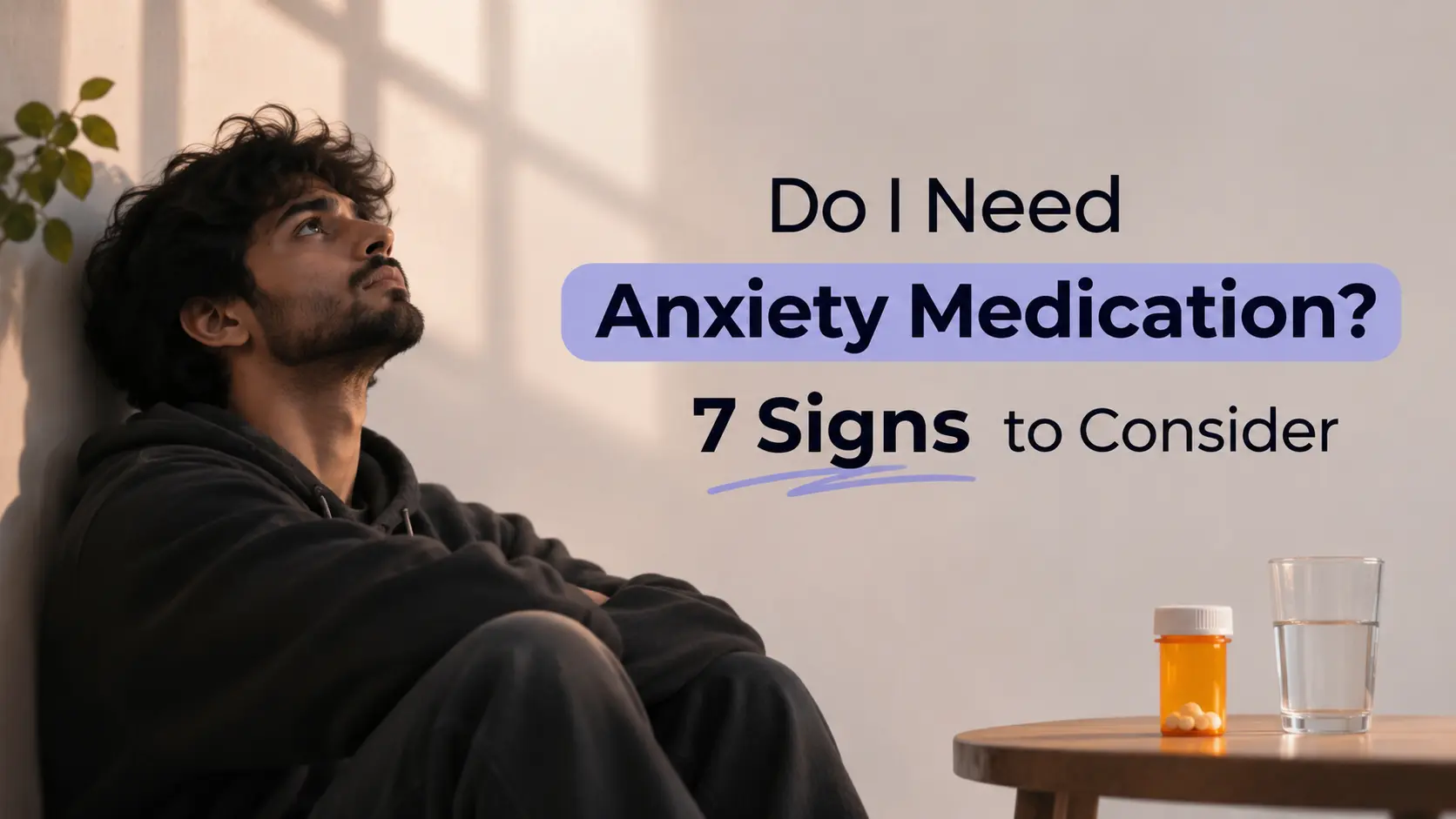
How to Know If You Need Anxiety Medication: 7 Signs to Consider
Written and clinically reviewed by Ashley Nerusu, PMHNP-BC
Maybe you've always considered yourself a worrier.
You think through every possible outcome before making a decision. You replay conversations long after they're over. Even when things are going well, part of your mind is waiting for something to go wrong.
For a while, you may have managed it.
You stayed busy. You pushed through. You told yourself that everyone gets stressed.
But lately, anxiety seems to be taking up more space in your life.
You're having trouble sleeping. You're avoiding situations you used to handle. Or you're exhausted from trying to appear calm when your mind rarely feels that way.
And now you're wondering:
Do I need anxiety medication, or should I be able to manage this on my own?
Anxiety medication may be worth discussing with a healthcare professional when anxiety is persistent, causes significant distress, interferes with daily life, or hasn't improved sufficiently with other approaches. Medication can also be considered earlier in treatment, depending on the diagnosis, severity, and your preferences.
Having anxiety symptoms does not automatically mean you need a prescription. Psychotherapy is an effective treatment for many anxiety disorders, and some people benefit from combining therapy and medication.
The right decision depends on your symptoms, medical history, previous treatment experiences, and personal goals.
Here are seven situations that may signal it's time to explore your treatment options.
7 Signs It May Be Time to Discuss Anxiety Medication
There is no official checklist that determines whether someone needs anxiety medication.
However, certain patterns can indicate that anxiety deserves professional attention and that medication may be one reasonable option to consider.
1. Anxiety Is Interfering With Your Everyday Life
Feeling nervous before an important event is normal.
But anxiety becomes more concerning when it repeatedly affects your ability to function.
You may notice that you're:
· Struggling to concentrate at work.
· Avoiding important conversations.
· Canceling plans because of worry.
· Having difficulty completing everyday responsibilities.
· Feeling emotionally drained by situations other people seem to manage comfortably.
You might still be showing up for work, caring for your family, and meeting your responsibilities.
But doing those things may require an exhausting amount of effort.
You don't have to reach a breaking point before seeking help.
When anxiety consistently makes everyday life harder, an evaluation can help clarify what is happening and whether medication, psychotherapy, or another approach may be appropriate.
2. You Feel Worried Even When Nothing Is Obviously Wrong
Sometimes anxiety has a clear trigger.
Other times, your mind continues searching for problems even when things seem relatively stable.
You may find yourself thinking:
What if something goes wrong?
What if I made a mistake?
What if something bad happens to someone I love?
You might recognize that your worries are excessive but still have difficulty controlling them.
Persistent, difficult-to-control worry can occur in generalized anxiety disorder (GAD), although diagnosis requires additional criteria and consideration of other possible causes.
According to the National Institute of Mental Health, GAD can involve excessive worry, difficulty controlling worry, and symptoms such as restlessness, fatigue, concentration problems, muscle tension, and sleep difficulties.
If worry occupies a substantial part of your day or affects your ability to relax, professional guidance may be helpful.
3. Anxiety Is Affecting Your Sleep
You finally get into bed, and your mind becomes more active.
You start reviewing tomorrow's responsibilities, replaying conversations, or imagining situations that haven't happened.
Maybe you fall asleep but wake up worrying.
Over time, inadequate sleep can make it harder to manage emotions, concentrate, and cope with everyday demands.
Anxiety and sleep difficulties can reinforce one another.
However, sleep problems can also result from medical conditions, medications, sleep disorders, or other mental health concerns.
A clinician can help evaluate the relationship between your sleep and anxiety rather than assuming medication is always the answer.
4. Physical Anxiety Symptoms Are Becoming Difficult to Manage
Anxiety doesn't only affect your thoughts.
It can also produce physical sensations, including:
· A racing heartbeat.
· Muscle tension.
· Sweating or trembling.
· Nausea or stomach discomfort.
· Dizziness or lightheadedness.
· A feeling of being short of breath.
These sensations can be frightening, especially when they occur unexpectedly.
Some people begin worrying about the physical symptoms themselves, which can intensify the experience.
New, severe, or unexplained physical symptoms should not automatically be attributed to anxiety.
Chest pain, significant breathing difficulty, fainting, or other concerning symptoms may require urgent medical evaluation.
When physical symptoms have been appropriately assessed and anxiety is contributing, treatment may help reduce their frequency or impact.
5. You're Avoiding More and More Situations
At first, you might avoid one uncomfortable situation.
Maybe it's a crowded store, an important phone call, driving on the highway, or speaking in front of others.
Avoiding it brings temporary relief.
But over time, the list of situations you avoid may grow.
You may begin changing your routines, declining opportunities, or relying on other people to handle activities you previously managed.
Avoidance can occur in several anxiety disorders.
Evidence-based psychotherapy, particularly cognitive behavioral therapy (CBT) and exposure-based approaches when appropriate, can be especially helpful for anxiety-related avoidance.
Medication may also be considered depending on the diagnosis, severity, and individual circumstances.
6. You've Tried Coping Strategies, but Anxiety Still Feels Unmanageable
Maybe you've made meaningful changes.
You're exercising, practicing breathing techniques, limiting caffeine, improving your sleep routine, or using mindfulness exercises.
Those efforts may help, but anxiety continues to interfere with your life.
Or perhaps you've been attending therapy and making progress, yet significant symptoms remain.
This doesn't mean those strategies have failed.
It may mean you would benefit from reassessing your treatment plan.
For some people, psychotherapy alone is sufficient. For others, medication or a combination of treatments may provide additional benefit.
Importantly, you do not always need to try every nonmedication approach before discussing medication.
7. Anxiety Keeps Returning or Seems to Be Getting Worse
You may experience periods when anxiety becomes more manageable, followed by episodes when it returns.
Perhaps symptoms become more intense during stressful periods or begin interfering with activities that previously felt comfortable.
If anxiety is becoming more frequent, severe, or difficult to manage, a clinical assessment can help determine whether a treatment change is appropriate.
A worsening pattern doesn't automatically mean medication is necessary.
But it is a reason to seek guidance rather than continuing to struggle without support.
Do I Need Anxiety Medication? Four Questions to Ask Yourself
If you're unsure whether to schedule an evaluation, these four questions can help you organize your thoughts.
They are not a diagnostic test or a medication eligibility checklist.
1. How Much Is Anxiety Affecting My Life?
Think beyond whether you can still complete your responsibilities.
Consider how much effort it takes.
Are you avoiding opportunities? Losing sleep? Spending hours worrying? Feeling exhausted from trying to appear calm?
The impact on your functioning matters.
2. How Often Am I Experiencing These Symptoms?
Occasional anxiety is part of life.
Persistent or recurring symptoms that interfere with daily functioning deserve closer attention.
A clinician can help distinguish temporary stress from a possible anxiety disorder or another contributing condition.
3. What Have I Already Tried, and Has It Helped?
You may have tried therapy, lifestyle changes, relaxation techniques, or other approaches.
Consider which strategies have helped, which haven't, and whether symptoms remain difficult to manage.
You don't have to exhaust every option before asking about medication.
4. What Are My Preferences and Concerns About Treatment?
Some people prefer to begin with psychotherapy.
Others are interested in medication or a combination of treatments.
You may have concerns about side effects, long-term use, or whether medication will change how you feel.
Those questions belong in the treatment discussion.
If anxiety is significantly affecting your life, you don't need to answer all four questions perfectly before seeking help.
They are simply a starting point for a more informed conversation.
Anxiety Medication vs. Therapy: Which Should You Choose?
Both psychotherapy and medication can be effective treatments for anxiety disorders.
The most appropriate approach depends on the specific condition, symptom severity, previous treatment response, medical history, and your preferences.
|
Treatment approach |
When it may be considered |
What it may help address |
|
Psychotherapy |
Often an appropriate first-line treatment for anxiety disorders |
Worry patterns, avoidance, coping skills, and responses to feared situations |
|
Medication |
May be appropriate when symptoms are persistent or impairing, or when medication is preferred |
Anxiety symptoms that interfere with daily functioning |
|
Combined treatment |
May be helpful when symptoms are more complex or one approach has provided insufficient improvement |
Both anxiety symptoms and the cognitive or behavioral patterns associated with them |
Medication and therapy are not competing choices.
For generalized anxiety disorder, the NICE guideline on anxiety management supports evidence-based psychological treatment and medication as treatment options, with selection guided by clinical circumstances and patient preferences.
The goal is to choose a treatment plan that is appropriate for you—not to prove that one approach is universally better.
What Anxiety Medications Are Commonly Prescribed?
There is no single medication that is best for everyone with anxiety.
Medication selection depends on the diagnosis, medical history, other medications, potential side effects, previous treatment response, and individual preferences.
SSRIs: Common First-Line Medication Options
Selective serotonin reuptake inhibitors (SSRIs) are commonly used to treat several anxiety disorders.
Examples include:
· Sertraline (Zoloft).
· Escitalopram (Lexapro).
· Fluoxetine (Prozac).
· Paroxetine (Paxil).
Not every SSRI has the same FDA-approved indications, and the choice depends on the condition being treated.
SSRIs generally require consistent use, and benefits often develop over several weeks rather than immediately.
Possible side effects include nausea, headache, sleep changes, sexual side effects, and sometimes increased restlessness or anxiety early in treatment.
SNRIs: Another Established Treatment Option
Serotonin-norepinephrine reuptake inhibitors (SNRIs) are another medication class used for certain anxiety disorders.
Examples include venlafaxine (Effexor XR) and duloxetine (Cymbalta).
Like SSRIs, these medications generally take time to provide their full benefit.
They can also cause side effects and discontinuation symptoms, so treatment changes should be discussed with the prescribing clinician.
Buspirone
Buspirone is a non-benzodiazepine medication used for anxiety, particularly generalized anxiety disorder.
It is generally taken on a regular schedule rather than used for immediate relief during a panic attack.
Its effects develop gradually.
Hydroxyzine
Hydroxyzine is an antihistamine that may sometimes be prescribed for short-term anxiety symptom relief.
It can cause sedation and may not be appropriate for everyone.
It is not generally considered a replacement for evidence-based long-term treatment when an anxiety disorder requires ongoing care.
Benzodiazepines
Benzodiazepines can reduce anxiety symptoms relatively quickly, but they carry important risks, including sedation, dependence, withdrawal, and dangerous interactions with alcohol or opioids.
They are generally not preferred for routine long-term treatment of many anxiety disorders.
Whether they have a role in an individual's care requires careful clinical judgment.
Important Medication Safety Considerations
Some antidepressant medications used to treat anxiety carry FDA boxed warnings about increased suicidal thoughts and behaviors in children, adolescents, and young adults, particularly during early treatment or dose changes.
Prescribers also consider potential drug interactions, bipolar disorder history, pregnancy-related considerations, other medical conditions, and individual risk factors when selecting treatment.
Never start, stop, or change psychiatric medication without guidance from your prescribing clinician.
Some medications require gradual tapering to reduce withdrawal or discontinuation symptoms.
Can Anxiety Be Treated Without Medication?
Yes.
Many people improve with evidence-based psychotherapy, and some anxiety disorders can be treated effectively without medication.
Cognitive behavioral therapy is a well-established treatment for several anxiety disorders.
Depending on the condition, treatment may involve identifying unhelpful thought patterns, reducing avoidance, practicing exposure-based techniques, and developing skills for responding to anxiety.
Lifestyle changes may also support treatment, including:
· Maintaining a consistent sleep schedule.
· Participating in regular physical activity.
· Reducing excessive caffeine.
· Practicing relaxation or mindfulness techniques.
· Building supportive daily routines.
These approaches may help manage symptoms, but lifestyle changes alone may not be sufficient for everyone.
Choosing medication is not a failure. Choosing therapy first is not a refusal to get help.
The goal is to find an evidence-based treatment approach that fits your needs.
How Do You Get Prescribed Anxiety Medication?
If you're considering medication, the first step is usually an evaluation with an appropriately licensed healthcare professional.
Depending on your location and circumstances, this may be a primary care clinician, psychiatrist, or psychiatric mental health nurse practitioner.
During the appointment, the clinician may ask about:
· Your anxiety symptoms and when they began.
· How often symptoms occur and how severe they feel.
· How anxiety affects work, relationships, sleep, and daily life.
· Your medical and psychiatric history.
· Current medications, supplements, and substance use.
· Previous experiences with therapy or medication.
· Your treatment preferences and concerns.
The clinician may also consider medical conditions or other mental health concerns that can contribute to anxiety symptoms.
An evaluation does not automatically result in a prescription.
The purpose is to understand your symptoms and determine which treatment options are appropriate.
If medication is recommended, your clinician should discuss the expected benefits, potential risks, alternatives, and follow-up plan.
What Should You Expect After Starting Anxiety Medication?
If you and your clinician decide that medication is appropriate, treatment usually involves ongoing follow-up.
Your provider may monitor:
· Changes in anxiety symptoms.
· Side effects.
· Sleep and daily functioning.
· Medication adherence.
· Whether the dose or treatment plan needs adjustment.
Some medications begin helping within a few weeks, while a fuller response may take longer.
If a medication isn't helping enough, that doesn't necessarily mean medication treatment won't work.
Your clinician may reassess the diagnosis, treatment duration, dose, side effects, other contributing factors, or alternative treatment options.
Do not stop medication abruptly without medical guidance.
When Should You See a Psychiatric Provider for Anxiety?
You don't need to wait until anxiety becomes unbearable.
Consider seeking an evaluation when worry, fear, avoidance, or physical anxiety symptoms are persistent, cause significant distress, or interfere with daily life.
A psychiatric evaluation may be especially useful if:
· You're uncertain whether your symptoms reflect anxiety or another condition.
· You're considering medication and want to understand the options.
· Previous treatment hasn't provided enough relief.
· You experience anxiety alongside depression, sleep difficulties, or other psychiatric symptoms.
· You want an individualized treatment plan.
If you are experiencing an immediate mental health crisis or thoughts of suicide, call or text 988 in the United States.
If you are in immediate danger or experiencing a medical emergency, call 911.
Anxiety Evaluation and Medication Management at Luna Bloom Psychiatry
You Deserve a Treatment Plan That Fits Your Life
Living with anxiety can be exhausting, especially when you've become accustomed to managing it quietly.
You may be functioning on the outside while spending much of your day anticipating problems, managing physical tension, or trying to keep your worries from interfering with your responsibilities.
You don't have to decide on your own whether medication is the right next step.
At Luna Bloom Psychiatry, our psychiatric mental health nurse practitioners provide individualized telehealth psychiatric evaluations and medication management when clinically appropriate.
During an evaluation, your provider may explore your symptoms, medical and psychiatric history, previous treatment experiences, and personal preferences.
Depending on your needs, recommendations may include medication management, psychotherapy referrals, additional assessment, or coordinated care.
Our approach emphasizes thoughtful evaluation rather than assuming that everyone with anxiety needs a prescription.
Telehealth appointments are available to eligible patients in states where our providers are authorized to practice. Services, insurance participation, and appointment availability may vary.
Explore Psychiatric Care at Luna Bloom Psychiatry
Learn more about Ashley Nerusu, PMHNP-BC.
Frequently Asked Questions About Anxiety Medication
1. How do I know if I need anxiety medication?
Medication may be worth discussing if anxiety is persistent, causes significant distress, interferes with daily functioning, or hasn't improved sufficiently with other approaches. A clinician can help determine whether medication is appropriate.
2. What are the signs you need anxiety medication?
There is no official checklist. Persistent worry, significant avoidance, sleep disruption, physical anxiety symptoms, and difficulty functioning may indicate a need for professional evaluation, which could include discussing medication.
3. Can you have anxiety and not need medication?
Yes. Not everyone with anxiety needs medication. Psychotherapy and other interventions may be effective depending on the condition, severity, and individual circumstances.
4. What is usually the first medication prescribed for anxiety?
SSRIs or SNRIs are commonly considered first-line medication options for several anxiety disorders. The specific choice depends on the diagnosis, medical history, potential side effects, and patient preferences.
5. Is anxiety medication safe to take long term?
Some medications, including certain SSRIs and SNRIs, may be used long term when clinically appropriate and monitored. Safety depends on the medication and individual circumstances. Benzodiazepines have different risks, particularly with prolonged use.
6. Can anxiety medication change your personality?
Anxiety medication is intended to reduce symptoms, not change someone's identity. However, side effects such as emotional blunting can occur with some medications. Discuss concerning changes with your prescriber.
7. How long does anxiety medication take to work?
Many SSRIs and SNRIs begin providing benefits over several weeks, with fuller effects sometimes taking longer. Other medications have different onset times. Your prescriber can explain what to expect.
8. Can I get anxiety medication through telehealth?
In many circumstances, yes. Appropriately licensed clinicians may evaluate anxiety and prescribe suitable medications through telehealth, subject to applicable laws, clinical judgment, and prescribing requirements.
9. Do I need therapy before trying anxiety medication?
Not always. Treatment recommendations depend on the anxiety disorder, symptom severity, preferences, and clinical circumstances. Therapy may be recommended alone, alongside medication, or as part of a stepped treatment approach.
10. What if my anxiety medication doesn't work?
Contact your prescriber rather than changing or stopping medication independently. They may review the diagnosis, dose, treatment duration, side effects, adherence, and other options.
11. Can anxiety medication help with physical symptoms?
Effective anxiety treatment may reduce physical symptoms associated with anxiety, such as muscle tension or autonomic arousal. However, new or unexplained physical symptoms should be medically evaluated rather than assumed to be anxiety.
12. When should I see a psychiatrist or psychiatric nurse practitioner for anxiety?
Consider seeking care when anxiety is persistent, worsening, difficult to manage, or interfering with daily life, or when you want guidance about medication and other treatment options.
Final Thoughts: Asking About Medication Is Not a Commitment to Take It
Wondering whether you need anxiety medication doesn't mean you've failed to manage stress.
It doesn't mean your anxiety is necessarily severe.
And it doesn't mean medication will automatically be the right choice.
It means you're considering whether additional support could make life more manageable.
For some people, therapy provides the tools they need.
For others, medication becomes an important part of treatment.
And for many, the most helpful approach involves a combination of strategies tailored to their symptoms and circumstances.
You don't have to make the medication decision before scheduling an evaluation.
A thoughtful conversation with a qualified provider can help you understand your options and decide what makes sense for you.
Medical References
1. National Institute of Mental Health. Generalized Anxiety Disorder: What You Need to Know.
https://www.nimh.nih.gov/health/publications/generalized-anxiety-disorder-gad
2. National Institute of Mental Health. Anxiety Disorders.
https://www.nimh.nih.gov/health/topics/anxiety-disorders
3. National Institute for Health and Care Excellence (NICE). Generalised Anxiety Disorder and Panic Disorder in Adults: Management (CG113).
https://www.nice.org.uk/guidance/cg113
4. American Psychiatric Association. Diagnostic and Statistical Manual of Mental Disorders, Fifth Edition, Text Revision (DSM-5-TR). 2022.
Medical Disclaimer: This article is intended for general educational purposes and does not replace individualized medical advice, diagnosis, or treatment. Medication decisions should be made with an appropriately licensed healthcare professional.


